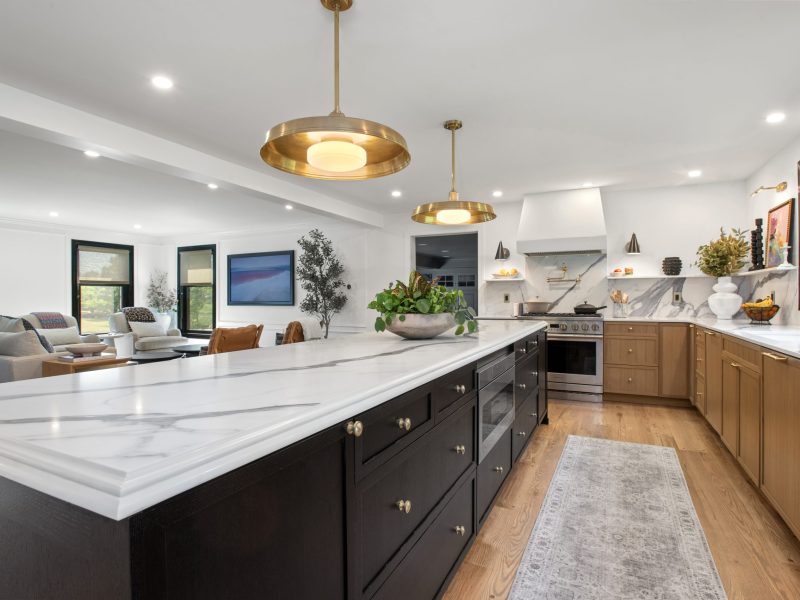
This Hope Ranch kitchen embraces the timeless appeal of a classic black and white design, elevated with the natural beauty of quartzite. The perimeter countertops, hood, and full-height backsplash feature Cristallo quartzite, a stone admired for its luminous appearance and incredible durability. At the center, a bold Cirrus Gray quartzite island with waterfall edges creates dramatic contrast, offering both a functional workspace and a striking focal point.
Known for its hardness and resilience, quartzite is so tough that sparks fly during fabrication—a true testament to its strength. By blending Cristallo’s bright elegance with the depth of Cirrus Gray, this kitchen achieves perfect balance: modern, sophisticated, and built to last. It’s a stunning example of how quartzite countertops and backsplashes can transform a kitchen into a statement of both style and performance.
Material used: Quartzite
Location: Santa Barbara, CA
Find answers to the most common questions about our quartzite countertops here.
Yes—quartzite is one of the most durable natural stones available for countertops. It ranks high on the Mohs hardness scale, making it highly resistant to scratches and everyday wear. Quartzite also performs well with heat, so it can handle hot pots and pans better than many other surfaces. Its strength and resilience make it an excellent choice for busy kitchens.
Because quartzite is a natural stone, it is porous and should be sealed to help protect against staining or liquid absorption. Once sealed, quartzite becomes much easier to maintain, resisting spills and bacteria. The exact sealing schedule can vary, so it’s always best to follow your fabricator’s recommendations for your specific slab and usage.
While their names sound similar, quartzite and quartz are very different materials. Quartzite is a natural stone quarried from the earth, prized for its strength and unique veining. Quartz, on the other hand, is an engineered surface made from crushed quartz crystals mixed with resins and pigments. Both are durable, but quartzite offers the individuality of natural stone, while quartz provides more uniform color and pattern options.
"*" indicates required fields
Fill out this form below and we’ll get back to you shortly.
"*" indicates required fields
Oops! We could not locate your form.